Sunday, 1 April 2012

March Films

Annie HallWoody Allen – DVD - A simply fantastic comedy, written with razor sharp wit and delivered with all the endearing neurosis of Woody Allen at his best. Some of the most memorable, quotable, Woody Allen moments in this film are beautifully balanced and facilitated by Diane Keaton’s genuinely quirky (unlike new venerations of ‘kooky’, that prescribe to the belief that a pair of unnecessary geek chic glasses and a love of The Smiths constitutes character) performance. 9/10

A collection of quotes:
 Alvy Singer: Here, you look like a very happy couple, um, are you?
Female Street stranger: Yeah.
Alvy Singer: Yeah? So, so, how do you account for it?
Female Street stranger: Uh, I'm very shallow and empty and I have no ideas and nothing interesting to say.
Male Street stranger: And I'm exactly the same way.
Alvy Singer: I see. Wow. That's very interesting. So you've managed to work out something?
[after Annie parks the car]
Alvy Singer: Don’t worry. We can walk to the curb from here.
Alvy Singer: A relationship, I think, is like a shark. You know? It has to constantly move forward or it dies. And I think what we got on our hands is a dead shark.
Annie Hall: So I told her about, about the family and about my feelings towards men and about my relationship with my brother. And then she mentioned penis envy. Do you know about that?
Alvy Singer: Me? I'm, I'm one of the few males who suffers from that.
Alvy Singer: Sylvia Plath - interesting poetess whose tragic suicide was misinterpreted as romantic by the college girl mentality.
[Alvy questions an old man on the street about his sex life]
Alvy Singer: With your wife in bed, does she need some kind of artificial stimulation, like, like marijuana?
Old Man on street: We use a large vibrating egg. 


The Tree of LifeTerrence Malick – DVD – If ever a film to seek out at the cinema…this would be it. The DVD I had even kindly suggested that the film was intended to be heard loud…so I obediently clutched the remote and, to my brother’s annoyance, increased the volume with excitable abandon. It is, without reserve, a film of epic ambition. The film creates a vastly symphonic and poetic meditation on the existence of God and creation – as inspired and explored through a tragedy of loss that befalls an American suburban family. Managing to soar through images of galaxies, solar activity, crashing waves, volcanoes and a jaw-dropping (near psychedelic) array of natural wonders, Malick tackles the history of life. Not exactly mumble-core or understatement…this could be a visualized enactment of America’s elusive desire to find the American Novel – just with added scale. A feeling underlined by Nick James’ comment that ‘Malick looks increasingly like the unconscious father of modern American cinema’, looming large like the literary heavy hitters, enshrined in the American consciousness (a la Whitman, Hemingway, Fitzgerald, Faulkner).
The film’s human pulse emanates from a fractured sub urban family, played with convincing brilliance by Brad Pitt (the father), Jessica Chastain (the mother) and most notably of the three boys: Hunter McCracken (whose older self is played by Sean Penn). After witnessing the death of a friend, the boy (played by McCracken) begins to unravel gradually developing into a brooding and awkward presence, teetering on the edge of violence. At its most disturbing this begins to echo in thoughts of killing his father and uncontrolled urges of violence (at one point resulting in the unfortunate demise of a frog strapped to a rocket… pretty funny to reference, but horrifically redolent of the casual fascination with power and death that can grip children). However, at no point does this narrative of family drama and growing up play out with conventional action, or scenes of extended dialogue. Instead these scenes (beautifully shot by DP Emmanuel Lubezki) act as sporadic grounding for the tidal ambition of the film’s spiritual and cosmic scope. At its best, the film achieves an awe inspiring and jaw dropping majesty (conducive to a naf and befuddled clutching for clichés) in which sweeping classical scores (from Bach, Mozart and Brahms to Preisner and Tavener) build into crescendos of, literally astronomical, beauty. Never before have I been near bleary eyed at the sight of astronomical photography… Patrick Moore would bloody love it. At times, the sheer grandeur and visual bombast of the film comes close to moments of overkill. Instead of the abstract poetry speaking, at times the questions of nature and grace are labored; the film occasionally had me wondering how David Attenborough’s familiar tones of reverence would sit comfortably alongside the visual sermon I was receiving. To again quote Nick James’ article in Sight & Sound: ‘Even at it’s most clichéd and pious, the film is at the very least the most astonishing family-snapshot-screensaver you will ever see.’ Such moments were only ever slight and fleeting though, and to be fair, a near inevitable resonance when bravely confronting such philosophical and visual enormity. It is that bravery of vision which makes the film so impressively triumphant – to have the conviction to make a film of such magnitude…where shots of canyons, galaxies and dinosaurs glide into the surreal imaginings of memory, faith and family is…for want of a better word: inspiring. So, whether or not you feel at points like you might have slipped into a particularly melodramatic episode of Planet Earth, the masterful achievement of this film cannot be denied…and thankfully, in winning the Palme D’Or was rightfully recognized. At the end of the film, I felt an excitement for the next opportunity to watch it again…so many amazing images to revisit. Whether it was the eerie and beautiful twirling in the air of Jessica Chastain’s levitating body (recalling, with a less severely haunting tone, that memorable scene in Tarkovsky’s The Mirror), the dazzling fiery solar ripples, or even Brad Pitt’s gurning concentration as he plays a church organ, there is a wealth of moments to choose from. 10/10


The Serpent’s EggIngmar Bergman – DVD – Having seen Through A Glass Darkly, Persona and Wild Strawberries, this was a pretty large let-down. Still, even David Lynch made Dune – so, in conclusion: being a genius is not mutually exclusive with the capacity to cock up. The film feels muddled in its story and confused in its tone. Only his second film to be in English, the dialogue suffers- feeling both clumsy and uncharacteristically devoid of developed thought. Character’s are left feeling shallow and blunt, even concluding with a painfully stereotypical Nazi villain (sparkling blond hair and dubious medical theories). The male lead, played by David Carradine, plays an out of work acrobat mourning the suicide of his brother. It is a bizarre premise for a character that, while intriguing as a concept, becomes impressively ignored by the film (in terms of its exploration and depth). Ultimately dull and, considering Bergman’s status and other work, an all round disappointment. The opening sequence, juxtaposing a slow motion black and white crowd (a sea of shuffling faces), with ridiculous jazz, was perhaps the film's most inspired moment. 3/10


Ivan’s ChildhoodAndrei Tarkovsky -  Tarkovsky’s first feature film follows an orphaned child who is desperate to help in the war effort and is subsequently used for slipping, unnoticed, into German lines. Requiring far less patience than Tarkovsky’s later work, it offers intimations of the ambition and style he would later develop. Beautiful shots of Russian landscape, the dreamy spindling limbs of silver birch trees, swamplands and the desolation of war’s destruction, make the film a consistently visually engaging watch. 7/10


The RiteMichael Håfstrom – This film feels heavily reliant upon Anthony Hopkins’ presence, which, although impressive, is not enough to carry a dull and uninspired film. Low on scares, lacking in depth, riddled with nauseating and unnecessary Americanisms that feel discordant with the attempted sombre tone, and a frustrating example of a great actor denied great material. Shame…could have been much more interesting, with more attention to building up a darker exploration of excorcism/being possessed/paranoia…and less distracting, flimsy character details it could have attained a bit more force. Highlights: Hopkins’ use of a welsh accent in a demonic context. Low points: the cameo of a donkey demon with red eyes to constitute the film’ scare factor. Optically odd mules and an abundance of (cute) frogs do not make for convincingly chilling viewing – or even interesting viewing. 3/10


The BroodDavid Cronenberg – DVD – This essentially dull film, interspersed with psychopathic dwarfs wielding steak tenderizers and laughably clumsy dialogue, left me disappointed. Following a similar structure to his later (and more entertaining) film Scanners, The Brood maintains a solemn tone of suspense in which the audience is left waiting for a cathartic sequence of drama or climactic shock. Unfortunately the final sequences really don’t merit the badly acted, badly scripted and frustratingly absent ‘bodyhorror’ FX that Cronenberg later pioneered (at their best in Videodrome, The Fly and Naked Lunch).
       Following the therapy sessions of an unstable mother, manipulated by the sinister presence of stern therapist Oliver Reed, it is revealed that [Spoiler] our erratic female protagonist has spawned a homicidal clutch of, pretty pissed off, dwarfs. The eponymous ‘brood’ exists in correlation to her moods, becoming increasingly murderous if she gets angry. The psychosomatic spawn live in Oliver Reed’s attic, in what looks like a budget boarding school dormitory, leaving only to avenge the mental turmoil of their frizzy haired and melodramatic mother: jumping from cupboards, wandering into school with murderous intent and scrabbling from under the bed. The problem being (overlooking the immature pseudo psychoanalysis and awkwardly blundering portrayal of complex emotions) that The Brood never delivers the horror of its potential. Mutant children enacting the repressed desires of a mother loosing her sanity, the sinister encouragement of a dubious therapist and the vulnerability of the mother’s original and ‘normal’ child, could conspire to create a disturbing epic.
        Instead The Brood is a yawn inducing and highly unsatisfying missed opportunity. The only elements that hint at the film’s true potential manifest in the commanding presence of Oliver Reed and the final scene [Spoiler]: the mother lifts up her top (a bizarrely Roman-esque diaphanous gown) to reveal her warted body and the bulging amniotic sack that protrudes, in alien fashion, from her stomach. Her externalized womb, drooping like a diseased tumor, is then torn open freeing a motionless and bloodied fetus. She then begins, oh so naturally, to cradle the wee brood baby and lick the blood from its body. This shocking moment seems to align the maternal figure with a nightmarish deity; she kneels surrounded by pillows, the wings of her gown spread like ceremonial robes drawn apart to present the majesty of her creation. Or perhaps even a vampiric nuance, with the blood licking and bat-like sleeves. Either way it is an inventive and memorable scene that, rather than justifying the weakness that precedes it, reminds us how brilliant Croneberg can be and, consequently, how disappointing the film is. For more Cronenberg fleshly freakery seek out Videodrome and Naked Lunch. Although both of these films also struggle with dialogue, the effects and imagery are enjoyably innovative and make the stunted human portrayals worth enduring. 3/10


Dogtooth – Giorgos Lanthimos – DVD – A mother and father confine their three children (two girls and a boy), who are aged ambiguously around their late teens/early twenties, to the isolation of their house and garden. Language is reinvented (a ‘pussy’ is a lamp, a ‘zombie’ is a yellow flower), cats are said to be the most dangerous animals in existence, fish are born in swimming pools, aeroplanes are flying creatures that occasionally fall from the air, and bizarre games (with stickers for rewards) are played to create a sense of hierarchy and loyalty. They are told that only when their dogtooth falls out (the canine) are they ready to leave the house and see the world.
The film’s style is comprised of static and clinically executed shots, often framing characters oddly and cutting off limbs or faces from the camera’s field of view. We are never told or shown the parents’ inspiration for the cruel and bizarre imprisonment of their children, which only serves to increase the film’s emotional opacity. Often described as an ‘icy’ or ‘cold’ film, it unflinchingly portrays scenes of violence, blood and perfunctory sex, without emotively preparing the viewer. Thus it becomes closer to a sterilized documentation, surveying the absurd charades of warped behavior with detached and unquestioning objectivity. It has the feel of a black satire, or a twisted fable, both of which refuse to confirm or appease any certain sense of message. Although uncomfortably dark (with scenes of graphic incest and violence), Lanthimos proliferates the film with brilliant absurdist comedy. One of the most vividly bizarre scenes occurs in the family’s celebration of the parents’ wedding anniversary. The brother plucks a classical guitar with a mournful repetitive melody while the two sisters contort in variously awkward dance moves. They start off dancing together like robotic cartoons of Broadway imitation, before one girl gets carried away and busts out some hammer-style, frantic dance tantrum. All the while the parents are sitting without comment at the dinner table, the composition (held beautifully throughout) of garish balloons and lights, enhances the girl’s display of mad, inappropriate and impressively energetic dance, until persuaded to sit down she collapses on the table. Seconds of exhaustion pass before she, just as frantically, begins to devour the pudding in front of her.  It is a moment in which words such as ‘bizarre’ and ‘absurd’ fall short of communicating such a crafted glimpse of madness. It is by no means an entirely pleasurable film to watch; veering towards uncomfortable and strange, and stoically remaining there for the film’s duration. It is a concept and film so uniquely weird that its story, shots and atmosphere linger long after viewing.
Lanthimos’ next film, Alps: has been described by the director as more dark and more funny than Dogtooth. It revolves around the idea of a company (‘Alps’) that provides the service of replacing loved ones. If a close relative or lover dies, actors can be hired out to replace the deceased, acting out scenes from their life and, supposedly, helping with the mourning of loss. A decidedly grim and odd idea that suggests Lanthimos may prove to be an excitingly strange director to follow!
7.5/10


Killer of Sheep - Charles Burnett – DVD – With a stunning soundtrack of bluesy soul ( Dinah Washington, Louis Armstrong, Scott Joplin, Elmore James – and plenty of others), black and white visuals and naturalistic (often sparse, or to hard to hear) dialogue, this film creates an immersive near documentary portrait of a black community in urban L.A. It is the sense of unadorned reality that makes the film such a beautiful watch: scenes of quiet discontent, relationships that need work but that are ultimately fine, kids playing in the street and the boredom of everyday, all conspire to evoke a very real and relatable community. The song that serves as the film’s emotional backbone finds its form in Dinah Washington’s chilling and moving ‘This Bitter Earth’. A song that has been powerfully reimagined, with the added emotional gravitas of Max Richter, for the final credits in Scorsese’s Shutter Island. 7/10


Wings of DesireWim Wenders – DVD - An existential and unapologetically poetic film that meditates upon the notion of angels, suggesting that angels wander through the world of the living (seeing only in a sepia tinged monochrome – naturally, an arty and melancholy palette for the afterlife), while always hearing the spiritual and cognitive monologues of mortals. The cinematography is consistently stunning, and the dialogue is maturely philosophical and thought provoking. The first half of the film is sometimes overbearingly elegiac and poignant at times, feeling as though Wenders’ vision lacks a touch of cynical humour or relief. However, this is probably symptomatic of an age/generation that lives and breathes irony, cynicism and pastiche… that ol’ ‘postmodern’ lack of familiarity with unadulterated poetry and pondering, uninterrupted by the nervous tick of some cultural reference or neurotic self-deprecation. A generation that navigated the awkwardness of growing up through documentary reality, the social studies of David Brent, the introspection of Peep Show, and the cinematic compass of Tarantino. An insular screen based existence of self imposed defining tags, unending playlists, favourite films, favourite music, the ‘relationship status’ and a general reluctance to confront character or life, unless through a series of quotations and cultural references. [Great article on this here]. Anywho…to return to Wim Wenders, Wings of Desire is a beautifully filmed, well acted and philosophical film that I certainly want to revisit. Also has an unexpected performance of Nick Cave and the Bad Seeds! 7.5/10


Friday, 16 March 2012

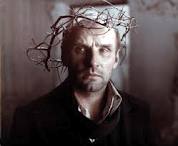
STALKER - Andrei Tarkovsky

Andrei Tarkovsky – Stalker –  seen at the Cinema – The Star and Shadow: a volunteer led cinema in Newcastle (4/3/12) :

‘My discovery of Tarkovsky’s first film was like a miracle. Suddenly, I found myself standing at the door of a room, the keys of which had, until then, never been given to me. It was a room I had always wanted to enter and where he was moving freely and fully at ease. I felt encouraged and stimulated: someone was expressing what I had always wanted to say without knowing how. Tarkovsky is for me the greatest, the one who invented a new language, true to the nature of film, as it captures life as a reflection, life as a dream.’
                                                                                                - Ingmar Bergman

9pm on a Sunday evening is perhaps not the optimum timing for a slow, 3 hour Russian epic…but then, when is? Made in 1979, following the more fragmented Mirror, Stalker clocks in at 161 minutes of pure, undiluted, vision. The story (loosely adapted from the novel Roadside Picnic, written by Arkady and Boris Strugatski), takes place in the parched sepia/monochrome tones of a dystopian future. However, the sci-fi element is repressed in favour of a more meditative and allegorical feel (no special effects, no space, no aliens…and little in the way of a delivered dramatic climax). A character, named the ‘Stalker’, leads two other men (given the names of the ‘Writer’ and the ‘Professor’) out of the bleak and crumbling setting of general urban decay – into a terrain of fields, flourishing flora and rivers. He is showing them the way to the ‘Zone’. The ‘Zone’, in a nod to the film’s original sci-fi roots, is a dangerous landscape in which some unspecified civilization has left the ominous ‘Room’. The ‘Room’ (in keeping with monosyllabic mystery) is meant to grant the innermost desires of whoever enters it. The creation of the ‘Zone’ (and its ‘Room’) led to the vocation of the ‘Stalker’, a figure chosen to guide people to the ‘Room’. The ‘Stalker’ is shrouded in unspecified religious connotations; a man weathered by sorrow and repentance driven by a faith in his role and purpose to facilitate this ambiguous pilgrimage.


 So, in short (a phrase alien to such a film) it’s not exactly a film committed to audience enjoyment. Tarkovsky famously said: ‘I am only interested in the views of two people: one is called Bresson and one called Bergman’. Subsequently Stalker is low on explosions…sex scenes…fights…and, well, any sort of kinetic energy. But it is, without a doubt a monumental achievement that manages to readjust attention spans into a near hypnotic state, in which concepts of time relax and magnify to create a viewing experience that mirrors the arduous journey of the film’s protagonists. Granted I had moments of exasperated boredom, moments in which I was silently urging Tarkovsky to call upon shock, or visit the sort of surrealism that punctuates Mirror. However, ultimately this is a film that manages to resist short-term aesthetic temptations in order to live with the viewer, breathe, roam and open up, suggesting a cinematic landscape beyond the film’s parameters. This is not simply a film you watch, leave and move on from. It is an investment and a challenge, yet despite its demanding nature, it offers also some of the most beautiful shots I’ve ever seen in a film. Shots that are made all the more powerful through their startling juxtaposition to the slow, almost mundane wandering that occupy the rest of the film. The last shot of the film, without giving anything away, manages to effortlessly conjure a sense of magic, peace and mystery that really stands as a testament to Tarkovsky’s deeply poetic feel for a single take’s development.


 The mention of poetry, rather than embodying a romanticised exaggeration of indulgent, anal dwelling, Russian reverence…is instead very relevant (honest!). Andrei’s father was a poet, and Andrei himself often considered giving up film to pursue writing, conceding that conceiving the film and the early stages of its contemplation gave him far more pleasure than actually making the film. This comes through, not only in the use of poetry in his films, but in the weighty pondering of the script. Along their journey, finding less than convenient spots to chat (casually sprawled across boggy mud, or lying in puddles, puddles of such devastating scale and miserable gravitas that they could only be Russian…these are no pavement dwelling Western puddles, or the sort of puddle that might ruin your day or prove a disheartening, trouser endangering, shoe invading dampness…these are puddles that soak the very soul! Puddles that seep into bones and gradually erode the ability to smile with the rippled history of years of oppression: literally the worst kind of puddles) the dialogue ranges across notions of art, suffering and inspiration. 


However, this is not to say that there are not moments of absurd comedy. Having finally reached the dilapidated, half flooded building in which resides ‘The Room’, the philosophy of their journey, the seriousness of their fate and the decaying grandeur of the building are all punctured by the unexpected ringing of a telephone. This intrusion of the pedestrian phone call manages to dispel the mystic spell of over 2 hours of solemnity with a shrill reminder, each man is inherently ridiculous. We are all ridiculous, silly, misguided, puddle ridden, stumbling examples of inadequacy. Like the characters in Stalker, we are all keen to peek above our own moronic mortal meanderings and glimpse some sort of meaning, to transcend, to find our innermost desires. What Stalker , so impressively articulates, is that it is that process of looking that defines us ,and compels us to live, not what is found or exists beyond our finding. Or, in laymen’s terms: aint the destination but the journey! After the gargantuan journey, ‘The Room’ pales from a beacon of promise to an anti-climax best left untouched, or an unknown too dangerous to enter, an infinity of possibilities that maybe, maybe should be destroyed?


A book has recently come out by Geoff Dyer, entitled ‘Zona’, which follows the film scene by scene- digressing in and out of the author’s memories, life and his views on the film. If you are at all interested in Stalker it is definitely worth a browse! What Dyer brilliantly achieves is a page turning book, of humour and wit, about a potentially over intellectualised and daunting film. Instead of pandering to a grovellingly verbose sense of Tarkovsky reverence, or using the film as an unwitting springboard for academic narcissism, he makes it, simply, a fun read! This in itself is a great achievement. However, I did find at times a mild disappointment at his unwillingness to expand on certain scenes in the film, seeming often too reliant upon the notion that Tarkovsky never intended his films to be interpreted symbolically…i.e. adopting a kind of ‘it is what it is’ attitude. In my opinion this hinders the book’s ability to communicate the film’s lasting power. That is being pretty pedantic though and, for a book about a single (and potentially inaccessible) film – it is a successfully entertaining, thoughtful and unique book. 


The Stalker’s wife gives a monologue near the end of the film. She turns to the camera and begins her story. Having calmed her broken, desperate and confused husband, she begins to explain the nature of their relationship. She seems grubby, ragged and tired, but desperate to maker her undying devotion known. Her speech is candid and directed at the camera, at the viewer, breaking the fourth wall in a way that seems closer to documentary than theatrics:

WIFE: You know your Mum was dead against it. You had already learned I expect, that he’s God’s fool… the whole neighbourhood was laughing at him…he was such a pitiful bungler…And Mum used to say ‘He’s a Stalker, a condemned man, always under arrest, and remember what sort oft children Stalkers have…’But what could I do?  I was sure I’d be fine with him – I knew, of course, that there’d be a lot of grief too, but bitter happiness is better than a depressing, grey life – or maybe I just told myself that afterwards. But he just came up to me and said ‘Come with me.’ And off I went. And I’ve not regretted it once. Not once! I’ve felt bad, I’ve felt terror, I’ve felt shame. But even so, I never had any regrets, nor envied others- that’s just how fate was, how life was, how we were. Even if our life were without grief, it wouldn’t be any better for it. It would be worse. Because it would also be without happiness, and without hope.’
                                                - taken from the screenplay, in Andrei Tarkovsky’s Collected Screenplays, trans. William Powell and Natasha Synessios (New York: Faber and Faber, 1999) ,p.415.

Tarkovsky later wrote, in response to this scene and the film’s end: ‘In Stalker I make a complete statement – namely, that human love is the miracle capable of withstanding any dry theorisation about the hopelessness of the world. This feeling is our common and incontrovertible positive possession. But we no longer know how to love…’
                                                - Cited by Natasha Synessios, in Andrei Tarkovsky’s Collected Screenplays, trans. William Powell and Natasha Synessios (New York: Faber and Faber, 1999) ,p.379.


Friday, 2 March 2012

Sir Reginald Moonface

Sir Reginald Moonface was a pretty labrador. He had bright eyes, a wet nose and an inoperable tumour. The tumour billowed impressively from underneath his jawline, not dissimiliar from the distended bulge of a croaking frog. Reginald lived in a kennel fashioned from toothpicks, mud and an assortment of dry leaves. He had a red collar and a pleasingly shiny nametag. The nametag read: Sir Reginald. His owner had neither the time nor inclination to add 'Moonface'.
    He was, by any standards, a forward thinking labrador. Reluctant to urinate in public, unimpressed by frisbees and cautious around water, his owner thought him a curious specimen - bordering on dull. Perhaps one of Reginald's most notably progressive and distinguishing traits was his tolerance of cats. Tired and frankly insulted by the expectation that a dog should chase a cat, that canine should be matched against feline, that pooch should be enraged by a fluffy tailed whiskered nemisis, and the entailing charade of cartoon connotations of an ultimately humiliated, salivating and panting dog - Reginald instead strived to pioneer a more sophisticated perspective. On seeing a cat (nextdoor there was a paticularly smug and eccentric siamese, named Isobella), he would craft a profound look that, neither confrontational nor hospitable, suggested 'you do your thing...I'll do mine'
    Reginald was an indulgently ecclectic soul. His palate was paticularly obscure, favouring as he did, the taste of anchovies on toast, pienapple yoghurt (increasingly hard to find - to Reginald's dismay) and of course an array of varied faecal dishes. He had, from an early age, been an avid collector. In his delightful cabinet of curiosities, Reginald had proudly amassed a small gallery of oddities. He had gathered acorns, a blue polythene bag, two Tanzinian postage stamps dated from '98, one prophylactic sheath (ribbed), a pair of half moon spectacles, a photo frame - without a photo, a long dead juvenile crow, a fraying length of rope, three average sized marbles, a stuffed trout, anonymous love letters found in a small casket by the river, one train ticket to Bognor Regis, a partially chewed scarf, and...a much coveted collection of Portugese military memorobilia. Each night, before turning in two anti-clockwise circles and collapsing to sleep with a sigh, Reginald would behold his treasures with near paternal pride. In a nightly perusal of his gathered trinkets, he would pay closest attention to the military memorobilia; nudging each medal, badge or propaganda based pamphlet into prime position with the delicate inching of his wet nose.
    Reginald lived in the small town of Snodland, situated on the A228 in the reasonable county of Kent.Snodland was formerly home to Thomas Fletcher Waghorn (1800-50) a postal pioneer who courageously shortened the overland route between England and India to a,  back then astonishing, brevity of 45 days. More recently it has been the cherished hometown of white reggae singer Judge Dread (real name Alex Hughes 1945-98). Reginald never cared for the Dread's music, but was humbled by the monumental success of Waghorn, in the parameters of his postal service. Sir Reginald Moonface would often, with the aid of  port and good company, wax lyrical regarding the overlooked merits of Chopin's chamber pieces. However come midnight he could be found rolling in a puddle of his own making, slurring the words to 'Mr Brightside' and other such overplayed wonders.
   Without warning Reginald would often disappear, disturbingly this could render whole weeks un accountable for. At least once a month Reginald would find himself face down in a foreign hedgerow with no recollection of where, why or how. On returning home he would take heightened comfort in his toothpick kennel, hoard of acorns, marbles, long dead crow and military memorobilia. It was in those moments, with great and undiluted affirmation Sir Reginald Moonface took great pleasure in reacquainting himself with himself.
Sir Reginald Moonface - he let the phonetic opulence of his title languish on his pink ham tongue. Sir Reginald Moonface was an undeniably singular labrador. Sir Reginald Moonface. An accomplished dog. Reginald. Lathered in the echoes of aristocracy. Sir Reginald. Perfumed in the nuanced aromas of smeared scents. Moonface. A deity unto himself. A labrador. Sir Reginald. Content and established. Himself, no other. Sir Reginald Moonface. A rare example of an animal at ease with its own transgressive being, far exceeding the conventional labrador template...and with such pride, such dignity, such assured aplomb! Sir Reginald Moonface - how you impress. With a satisfied grunt Sir Reginald Moonface settled into the pillow of his ungainly tumour. Both silken eyelids drooped, and before long he was twitching in that way only dogs can; the somnambulant jerk of the dog dream. Not even Reginald was beyond that. In dream, he liked to speculate, we are all equal and rightly revert ,with hedonistic abandon, to our instincts...and so, with a sizeable globule of saliva dangling from his awkwardly placed head, front paws scrabbling at the air, he whimpered into the night: a dog like any other.

Thursday, 1 March 2012

FILM LOG: FEBRUARY

And so, tis that time of Film logging adrenaline in which, with nimble fingers tapping and myopic screen staring scrutiny, the mollusc imparts his viewing documentation. It may not be interesting, it may not be entertaining, Hell...it may not even be worth your time (pretty much a given)...but my God it sure is...a film log. So, without further equivocation...It has been a month of opportunities missed...I wanted to see 'Martha Marcy May Marmaduke Marigold Jeff Marlene' (or words to that effect)...but missed it, missed i tells ya! Still, I have high hopes for that...and shall definitely be seeking it out on DVD. I was also intrigued by Polanski's 'Carnage', and so - naturally - missed that too. I didn't want to see 'War Horse' and so, in missing that..succeeded to a certain degree..? Anyway, equestrian evading elitism aside ( 'What's wrong with a Spielberg family tear jerker that delivers the entertainment goods!?' I hear you cry... and Kermode gave it a good review...can't argue with Kermode...and yet I feel, unfairly, I would be rooting for the glue factory from the opening credits...). However, it has been a month of consistently dam gooood films otherwise...For a more expansive overview of the month's films: http://outsidethespotlight.wordpress.com/2012/03/01/film-log-2012-february/: Concise and informative: two virtues this blog neglects with unrelenting commitment. The Films:


L’AtlanteJean Vigo – Cinema (4/2/12) - Made in 1934, this film is often beautiful, continually hilarious, touching, and effortlessly ahead of its time. Following a recently married couple and their life upon a barge, the film combines a joyous innocence (played out through the casual acrobatics of undeniably cute kittens, young love, roughish drunkards, bad tattoos, Parisian romanticism-and an eye for brilliant and eccentric characters) with moments of surrealism ( noticeable in a startling underwater scene,  the erotically charged implication of quick cut parallel scenes, a fascination with the odd, the cluttered mementoes of travel…ranging from tribal masks, nude photos, severed hands in a jar, antiquarian musical boxes and a grotesque puppet…to the cluttered crockery of an old sailor with a magpie’s mentality). 9/10


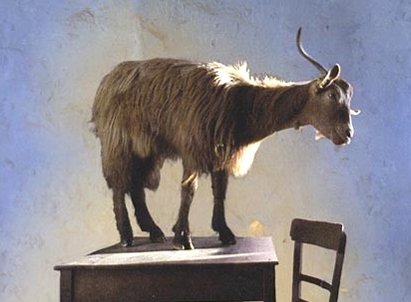
Le Quattro Volte -  Michelangelo Frammartino – DVD (5/2/12) – A rare example of a film that by-passes dialogue and the structure of character narratives in favour of cyclical observation. In a sense characters still exist; it’s just that the characters in this film exist through nature and the natural, as opposed to human interaction. The film follows a goat herder, a goat and a tree (with inspiring cameos from a sheepdog and an impressive gathering of snails). Evoking notions of reincarnation, the film uses long static shots-allowing the natural world (hillsides/rustic lanes/swaying trees/morphing clouds/sweeping shadows) to play out in its own time. A film that is moving, funny and beautiful (in ways which deserve such overused and sweeping terms). Through its inherent slowness, our relationship with the film (and the concept of film) is changed to allow a very peaceful, contemplative interaction with simple (but easily overlooked) epiphanies of the natural world. From a swirling cloud of dust, caught and illuminated in a shaft of light, to the entertaining, funny and emotive antics of the baby goats. A genuinely different and uplifting feat of cinema. 9/10


Tinker Tailor Soldier SpyTomas Alfredson – DVD (14/2/12) – A fantastic cast, supported by a developed and interesting score ensure the film’s, admittedly complex, plot maintains its compulsive and hypnotic momentum. However, being somewhat incompetent at following convoluted and tricky espionage based films, my enjoyment was at times compromised by a generally bewildered inability to follow the sophisticated array of deceptions, characters and scenarios. Alas- my concentration span and grasp of all things logical impedes my focus…and before you know it, I am scrutinizing inconsequential details (like what brand of mint Gary Oldman is, so profoundly, popping into his mouth), while managing to only tenuously get the gist of who was leaking what to who, when and why. My struggle to maintain a rational interpretation of unfolding events, entirely reflective of my own plot flustering flaws, detracted from the film’s impact-it is, meanwhile a credit to the director’s assured control of scenes and appropriately cold and sober style that I was (confusion aside) hooked throughout. Therefore, for those in possession of the assets of plot following calculations (i.e. probably most people bar myself…give me a warped, dream/reality, mind fracturing, art-house introspective voyage and I’m fine…a concrete plot with intricate details…and yup, I’ll descend into a distracted pondering of mint related observations) I highly recommend it! So, it probably deserves an 8/10…but (through no fault of the film…and merely as a quirk of my own shameful stupidity) it gets a less exciting, undeserved – 7/10
The Woman in BlackJames Watkins – Cinema (20/2/12) – With 6 seconds shaved from its original cut, to reduce the rating from a 15 to a more profitable Potter crossover 12A audience, the film remains a chilling and effective jump-fest. Although hardly reinventing the well-worn ghostly tropes; indulging in an admirable buffet of formulaic genre games, from creaking floorboards, ill-advised solitary wandering and the unreliable candle flickering in the shadows , to creepy children, the chipped glass stare of  neglected dolls and an obligatory hostile community of oddball fuckwits. However, while not pioneering any new ground…it doesn’t need to. Within the parameters of the type of film it is (a standard suspense saturated gothic chiller…a type of horror that, in its lack of ‘torture porn’ aspirations, or anguished laboured psychology, arrives with a refreshing nostalgia – befitting of the ‘Hammer’ brand), the film readily delivers. It is, in short, fun. Daniel Radcliffe provides a solid performance which, while hardly the sort of role that requires challenging diversity, is nevertheless executed with consistent success. In style and tone the film sits somewhere between The Others and The Orphanage, more engaging than the former and less memorably accomplished than the latter (to be fair, The Orphanage is an exciting, progressive and brilliantly shot emotional film…as opposed to The Woman in Black, which is a successful exercise in genre). 7/10 (see...this is where ratings become misleading...7/10...as good as 'Tinker Tailor..'? Well, not really...but within the boundaries of its own intentions...7/10 enjoyment factor!)

Raging BullMartin Scorsese – DVD (21/2/12) – Robert De Niro lends the film an uncompromising, committed and magnetic focus through his performance as Jake La Motta. He exhibits the infamous body change: impressively toned and muscled boxer at his height transformed into a tragic belly-bearing and paranoid sleazy embarrassment. Brutal fight sequences, terrific tension engineered through fraught relationships and some arresting use of slow-mo. with black and white. Unfortunately the sound on my DVD occasionally decided to abandon certain scenes…leaving De Niro enigmatically and with soundless conviction mouthing…well…I have no idea. Blasted technological wankery. Still, this was only on a couple of isolated and short moments-which, due to the film’s all round brilliance, did not reduce my enjoyment. A very different tone than Goodfellas and Cassino -  LaMotta’s doomed and violent character injects the film with an uncomfortable and worrying presence, around which everything else unravels.  7.5/10

The Edge of Heaven Faith Akin – DVD ( 23/2/12) – A masterfully constructed drama which deservedly won ‘Best Screenplay’ at Cannes in 2007. An old man, (short, cheeky swagger, flat cap and tight polo shirt under a generic tracksuit top: prime ‘European old man, sitting at a plastic table playing cards outside a café and gurning happily as life goes past’ material…not to stereotype…but he had that grinning carefree, characterful glint; shrunken and old but still chasing waitresses, in a way it seems English old folk can’t quite manage. It seems the English oldies (as stereotyped) are resigned to a shuffling stoicism, punctuated by occasional grumbling or enthusiastic anecdotes about daytime gameshows…ANYWHO….this old man was that particular European strain of old…apologies, this tangent is bordering on, if not completely, irrelevant) wanders, nay, struts, into what is obviously a pretty grim red light district. On finding his prostitute of choice, he eventually (after several later visits) offers to pay as much as she makes, if she will live with him. All she has to do is live with him…and (he emphasises with priority) fuck him. We meet the old man’s son, a university professor who begins to doubt his vocation, and doubts, even further, any remaining integrity in his father’s choices. What then follows is an unfolding drama in which three families intertwine through chance and choice, exploring separate cultures, generations, politics and relationships. It is an ambitious and brilliantly executed drama, drawing lives together with believable and tragic consequences. From a young political activist, a lonely mother, and the life changing thrill of unexpected meetings, everything is balanced with intricate measure and set in motion by the old man’s unorthodox relationship with the prostitute. It also features a really interesting soundtrack that corresponds to the varying cultures with authentic and (little heard over ‘ere like…or condemned to the expansive and reductive ‘world music’ section) memorable choices. 8/10

Tony Takitani- Jun Ichikawa – DVD (28/2/12) – A beautiful film based on a Haruki Murakami short story and, like Murakami’s style, the film manages a simple and elegant sense of poetry through an understated existential melancholy. The film is simple, haunting and successfully evocative of Murakami’s masterful ability to be at once movingly human and intriguingly bizarre. Also features a suitably tragic, poignant and minimalist piano soundtrack by Ryuichi Sakamoto. 8/10

Saturday, 11 February 2012

Some of my Photography...with extracts of poetry (that is not mine)

Goodbye

If you are still alive when you read this,
close your eyes. I am
under their lids, growing black.


- Bill Knott, in Surrealist Poetry, ed. Edward B. Germain ( Middlesex: Penguin Books, 1978)


'O plunge your hands in water,
      plunge them in up to the wrist;
Stare, stare in the basin
      And wonder what you've missed.

'The glacier knocks in the cupboard,
        The dessert sighs in the bed,
And the crack in the tea-cup opens
        A lane to the land of the dead.

-from 'As I walked out one evening...' , W. H. Auden


Wld it be different with a different pen? Of about to within which
what. Poppies grew out of the pile of broken-up cement. I began
again & again. These clouds are not apt to burn off. The yellow room
has a sober hue. Each sentence accounts for its place. Not this. Old
chairs in the back yard rotting from winter. Grease on the stove top
sizzled & spat. It's the same, only different. Ammonia's odour hangs in
the air. Not not this.
   Analogies to quicksand. Not that either. Burglar's book. Last week I
wrote "I can barely grip this pen."White butterfly atop the gray con-
crete. Not so. Exactly. What then? What it means to "fiddle with" a
guitar. I found I'd begun. One orange, one white, two gray. This morn-
ing my lip is swollen, in pain. Nothing's discrete. I straddled an old chair
out behind the anise. A bit a part a lake. I cld have done it some other
way. Pilots & meteorologists disagree about the sky. The figure five
figures in. The way new shoots stretch out. Each finger has a seperate
function. Like choosing the form of one's execution.

-from Tjanting, by Ron Silliman.


'By degrees we beheld the infinite Abyss, fiery as the smoke of a burning city; beneath us at an immense distance was the sun, black but shining [;] round it were fiery tracks on which revolv'd vast spiders, crawling after their prey; which flew or rather swum in the infinite deep, in the most terrific shapes of annimals sprung from corruption. & the air was full of them, & seemed composed of them; these are Devils. and are called powers of the air, I now asked my companion which was my eternal lot? he said, between the black and white spiders...'

-from, The Marriage of Heaven and Hell, William Blake.


Wherever in this city, screens flicker
with pornography, with science-fiction vampires,
victimized hirelings bending to the lash,
we also have to walk . . . if simply as we walk
through the rainsoaked garbage, the tabloid cruelties
of our own neighborhoods.
We need to grasp our lives inseperable
from those rancid dreams, that blurt of metal, those disgraces,
and the red begonia perilously flashing
from a tenement still six stories high,
or the long legged young girls playing ball
in the junior highschool playground.
No one has imagined us. We want to live like trees,
sycamores blazing through the sulfuric air,
dappled with scars, still exuberantly budding,
our animal passion rooted in the city.

-  part I, in 'Twenty-One Love Poems', Adrienne Rich


Saturday, 4 February 2012

FILM LOG: JANUARY

[all images courtesy of respective distributors]

 So, in a moment of inspired boredom:  a revelation of daringly uncool proportions dawned upon a young man...a young man with whom this paticular blog mollusc is acquainted with...well, he decided that in order to capitalise upon the time consuming hobby of reclusively watching films, pillaging amazon and idly perusing HMV, it would be beneficial to life, cinema, the internet and presumably a whole host of other important aspects of modern life...to keep a film blog. I know...pioneering...audacious...madness!!? A step too far, an originality uncalled for in an age of tentative blogging, an age in which cinema remains a relatively little talked of novelty...surely this was leaping into an unfathomable abyss, such courage, such goddam couarage! Still, prevailing with a sense of mild dissapointment (regretting his digression of unfunny sarcasm) the mollusc followed suit and joined in the film logging revelry. The rules were simple: no film should be listed that had been watched before, films should be rated out of ten (none of this predictable five star bullshit... in a time of mavericks the 'out of ten' rating is king!) , all comments made about said films should be expressed with an air of near pretentious authority, reviews should be brief ( ideally one sentence- realistically a large and jumbled couple of sentences, inviting dubious use of odd punctuation)...also all comments made should be read, recieved and pondered upon with a fanatical eye of scrutiny...as if these words are profound pebbles of wisdom, plucked from the shoreline of anonymous genius. Failing that, bad grammar, bad writing, and bad taste, should be dutifully ignored. Anger Management is a good film. I dont care what anyone says. With that initial gem of insight I bid thee farewell...and enjoy...this fairly tepid critique of ecclectic films!


My WinnipegGuy Maddin – DVD (3/1/12) – A unique and inventive documentary that sleepwalks its way through a poetry of memory, film and histories, creating a dream of obscurity and absurdity. – 7/10

If…. Lindsay Anderson – DVD (4/1/12) – An uprising against authority within an old boarding school, segmented into chapters; the rebellion is depicted with an unnerving and surreal undercurrent of homoeroticism, oppression and humour. 6/10


Enter the VoidGasper Noé – DVD (5/1/12) – An interesting concept ( based on ideas from the Tibetan Book of The Dead) following a young man after his death, his soul in continual purgatory floating over scenes from  the past and present and the people he knew-until eventual reincarnation. However, what could have been a brave and visionary film becomes an infuriatingly clumsy and repetitive exercise in immature and frustrating filmmaking; patronising the viewer through removing any sense of subtlety in favour of a bored oblivion of strobe lights and mumbled pseudo philosophy. It becomes an adolescent crash course in trauma, sex and trippy camera techniques, fuelled by endless transparent excuses for extravagant lighting. 5/10


The Child (L’Enfant)Jean-Pierre Dardenne and Luc Dardenne – DVD (5/1/12) – A simple and understated drama, beautifully observed and brilliantly acted-it’s emotional force grows long after viewing. 7/10


GoodfellasMartin Scorsese – DVD (8/1/12) – After seeing Casino my reaction was comparatively muted, as they are such similar films (in structure/style/characters/music). However, undeniably a great and compelling film-Joe Pesci is fantastic (essentially the same character as in Casino), missed De Niro being a more central character. A glorious proliferation of the phrase ‘Breaking my balls!’ and of course the tense…‘How am I funny…?’ 8/10

The Discreet Charm of the BourgeoisieLuis Buñuel – DVD (9/1/12) – A ridiculous, absurd and playful satire on the superficial traditions of bourgeois artifice; although the dream sequences are entertaining, the film’s formulaic dinner interruptions soon become repetitive, bordering on clumsy. Still: an entertaining oddity.  Best scene: the melancholy monologue of a lieutenant recalling his traumatic childhood, casually ambushing three women at a tearoom to launch into a tale of ghosts and murder…also, cockroaches on the piano keys-the piano as a torture device- connotations of Un Chien Andalou  6/10


The Saddest Music in the WorldGuy Maddin – DVD (17/1/12) – A warped melodrama that flickers between darkly comical and wildly absurd, all through the surreal and shifting lens of a dream like black and white scratched camera. An inventive story (based on Ishaguru’s original screenplay), that while ridiculous and grotesque, also manages to create moments of surprisingly emotive and memorable beauty. An eccentric, unique, musical and accomplished slice of Surrealist cinema. 8/10


Red RoadAndrea Arnold – DVD (25/1/12) – Compulsive viewing; the camera follows the female protagonist’s moves with the same perplexed obsession as she displays, following apparent strangers on her multiple CCTV screens. The isolation of her job, her life and the frightening situation she wilfully constructs, conspire to create a cold and isolated environment of loneliness that, as the narrative and characters build, becomes all the more powerful. Pretty harrowing-but displays the same sensitive camera work evident in her later films ( Fish Tank and Wuthering Heights), that is at once delicate and raw-a sensitivity to light and texture that seems to suggest a genuinely individual cinematic style emerging. 8/10


ShameSteve McQueen – Cinema (26/1/12) – A stylish and exciting follow up to an astonishing debut. Having seen Hunger, which established McQueen as a daring and provocative director, Shame seems comparatively less visually confrontational. Fassbender’s stunning performance is allowed to dominate attention; the visuals becoming less strikingly arthouse and more filmic. This provides the space and platform from which Fassbender’s character development can confidently drive the film’s power. McQueen is obviously a very individual and innovative talent, but in this film acting eclipses cinematography. In the films of Andrea Arnold and Steve McQueen Britain has acquired two new and progressive directors, both unafraid to be artistically bold. 7.8/10 (why the pretentious ‘.8’? Well, not entirely sure…it was better than a 7.5…and not quite an 8…that’s the unhelpful numerical logic…otherwise, I just felt – despite the need for an element of cold detachment in the film, it was the moments of dialogue that shone…and, maybe there just wasn’t enough – I felt myself wanting to care more, wanting to be more involved. For the exploration of ‘sex addiction’ to maybe surface more overtly in dialogue…one of the few references is when his sister dismissively sneers ‘Don’t talk to me about a healthy sex-life’…I just feel that there could have been more made out of it, for a director who is clearly gifted with controlling and presenting conversation I wanted more!! Maybe a result of too high expectations…however still a dam good film…and maybe I’ve been harsh).


The DescendantsAlexander Payne – Cinema (29/1/12) – A melancholy and gently humorous portrayal of a family coping with unexpected tragedy and change. The script is fantastic, with understated emotion that builds without ever becoming sentimentalised or clumsy. Roger Ebert, in his review of The Descendants (for the Chicago Sun Times), insightfully credits George Clooney as a presence of intelligence in the film. Clooney plays ‘Matt King’ with nuanced gestures, measured emotion, pace and control – all of which allows the audience to infer a weathered maturity beyond what is said or physically elaborated. This ‘intelligence’ conspires to elevate the suave (insanely irritating) Clooney cliché lady’s man persona…allowing instead a far more developed and interesting character to emerge…and not simply a new take on that  ‘Clooney’ image. 8/10


Until February.......

Two Poems and a Short Story Extract - in the NCLA

http://www.frictionmagazine.co.uk/2012/02/03/welcome-to-issue-4-of-friction-magazine/