Tuesday, 12 November 2013

The World's End


The World’s End – Edgar Wright – The finale to the ‘Cornetto trilogy’ is entertaining and occasionally very funny - but ultimately a fairly patchy conclusion. I feel that ever since watching Shaun of the Dead, which felt infinitely quotable, immediately relatable (in terms of 20s slackers, not the zombie apocalypse), perfectly paced, exciting and consistently hilarious, all of Edgar Wright’s films (all, being for me, Scott Pilgrim and Hot Fuzz) have felt doomed to disappoint. Nothing can recapture the impact that Pegg and Frost’s manboy romance had, the jittering quick-cut cool of Wright’s editing style, the cinematic articulation of a new sense of British humour which had been previously confined to TV, the witty soundtrack and cine-literate geekery – first time around all of that felt perfect, it felt immediate, urgent and ripe for cult claiming. Unfortunately, once repeated: manboy romance becomes anonymous bromance and the familiarity of Wright’s quirks, divorced from ‘newness’ become waring. However, that said – there is much to enjoy here, and it is only because Shaun of the Dead was first – and set the bar so high – that Hot Fuzz, and now The World’s End have suffered. Having Pegg’s character as the grating boy who never grew up, from the ‘cool kid’ to the tragic stagnation of eternal adolescence, does seem to provide the trilogy with its own inbuilt critique. The style of Edgar Wright’s quick cuts and the soundtrack playlist attention, combined with the natural chemistry of Pegg and Frost (even when in hateful opposition, or begrudging friendship) all become recognisably wed to a ‘male phase’ – the obsessions, indulgence and insecurity of not wanting to grow up. This is the film that, in its first half, elegantly captures that self-awareness – and is able to reflexively apply it to the trilogy’s style of filmmaking, in addition to the ‘manboy’ condition. Sadly, the second half has to oblige to self-made expectations of genre worship – and so spirals into sci-fi action. While all of this is fun – and worth the cinema trip – it does not satisfy the film’s earlier emotional promise. The team of Edgar Wright, Simon Pegg and Nick Frost is always enjoyable, compelling and funny.  I just feel as though, in Hot Fuzz and The World’s End, their enormously talented writing potential, consistent wit and enjoyment of character, all seem underserved by the need to jump through the thrills of genre parody and incongruous action.  7/10


A Field in England


A Field in England – Ben Wheatley – With Down Terrace, Kill List and Sightseers, Ben Wheately has competently emerged as one of the most interesting, new British directors. A Field in England definitely keeps Wheatley’s independent trajectory intact…a low budget, black and white, English Civil War story that focuses on hallucinogenic mushrooms, cryptic rituals and minimal narrative, is hardly going to allow him to melt into yawning avenues of the predictable. Unfolding in the limitations of one field, the film feels as sparse as its setting with an uneasy atmosphere that at times recalls the bare human struggles of Beckett. Working within budget constraints, Wheatley constructs some beautifully striking and strangely disturbing imagery, the best moments of which are simply exercising slow motion, a strange rope and the possessed grimace of Reece Shearsmith (who has acted so brilliantly in the macabre League of Gentleman and Psychoville). I felt the film was at its most inspired when inventively embracing its more experimental leanings: the arresting slow motion, the kaleidoscopic shroom trip and the singing tableaux vivants that acted as strange pagan interludes – all being notable examples. I felt when the film seemed to fall short was in its climax, descending into more recognizable fits of violence and action (recalling the head splattering in Wheatley’s other films, while powerful and integral to other contexts – here the violence felt like a lazy shortcut to achieving cinematic resolution – which the film didn’t need). 7/10


Happiness


Happiness – An excruciating pitch black comedy of all that threatens, undermines and betrays the sentiment of its title: happiness. The film follows a family of three sisters and charts their varying lives and relationships, introducing an extended cast of weird, debauched and tragic characters that weave in and out of parallel vignettes. The opening sequence is perhaps one of the most hilarious and perfectly timed and acted scenes of a couple’s break up that I have ever seen – culminating in the quivering assertion that ‘I’m champagne and your SHIT….and you’ll always be shit!’ At the film’s troubling centre is a father who, despite maintaining the edifice of a suburban, happy family, is struggling with the darkness of his hidden existence as a paedophile. We watch, with griping unease, as he lures his son’s friends, shares intimate conversations with his son about ejaculation and eventually arrives at a trembling confession. It is this dark thread that draws the rest of the film together, with genuinely powerful performances from both Dylan Baker (as the father) and Justin Elvin (as the son). Elsewhere Philip Seymour Hoffman channels the same sweaty, frustrated desperation that he brings to Boogie Nights, but with the lonely and repulsive factor escalated to hilarious heights (or rather to its darkest, most comical lows). Some strands work less well, one of the sisters (the one we see breaking up in the first scene) gets embroiled and exploited in a ridiculous relationship with a Russian immigrant, which feels comparatively implausible and slightly disappointing – considering the narrative possibilities for her character at the film’s start. Minor flaws aside, this is an impressively dark and uncomfortable comedy that still manages to forge many moments of comic brilliance. 8/10


Apocalypse Now


Apocalypse Now - Not much insight, thought or commentary I can add to this monumental beast of modern cinema. I watched the Director’s ‘Redux’ cut, which took the, already long, film to an expansive grandeur of 202 minutes. I was absorbed, thrilled and effortlessly immersed in the mesmeric Heart of Darkness journey. An epic example of sustained and coiling suspense – ploughing through a hybridised jungle of genre flux: adventure, introspection, horror, war, politics, social commentary, more horror, character study, literary dimensions, action, parody, romance, grand tragedy and above all, as mentioned before ‘the horror, the horror…’ 10/10


The Holy Mountain


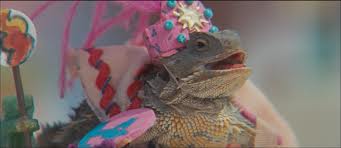
The Holy Mountain – Alexandro Jodorowski – A film that showcases Jodorowski’s extravagant vision of psycho-magical and astrological spiritualism through a journey of convoluted enlightenment. Jaw dropping set design, with artful compositions and opulent costumes, all closer in style to surrealist paintings than to the familiar tropes of cinema. His imagination bludgeons its excitable imprint between carnivals of adolescent fixation and a solemn fetish for spiritualism, pitching the tone somewhere between Monty Python, elaborate mysticism and the graphic novels of Max Ernst. All of which makes this a hugely entertaining, maddening, overblown and intensely individual film, replete with memorable sequences and laughable conviction. Perhaps the most memorable, for me, was the Mexican conquest – re-enacted by various reptiles (REAL reptiles), all wearing tailor-made mini suits of armour…or waddling, leaping and simply sitting in ornate garments of colourful Inca apparel. Perhaps the most laughable moment arrives at the end: a moment in which the ‘fourth wall’ is broken – revealing camera/crew and lighting, accompanied by the ‘revelatory’ knowledge that ‘Real life awaits us.’ One of many instances in which the film is nowhere near as profound as its theatrically assured and consciously symbolist boasting of the bizarre would suggest. However, the dazzling oddity, audacity and magnificent absurdity of this spectacle cannot be ignored…and should be witnessed by everyone and anyone who professes an interest in the visionary and strange. 8/10


Princess Mononoko


Princess Mononoko – Hiayao Mayazaki – I was pretty tired when I watched this, so feel like my review will short-change the detail of the film – which was, in expected Studio Ghibli fashion, exuberantly imaginative. At the film’s core – behind the battles, beasts, and oddly Tolkien-like vibes, is a meditation on nature and mankind…the wrestling and not uncomplicated relationship twixt the two. The ‘spirits of the forest’ are memorably iconic creations from the Ghibli universe: like small lunar dolls, ticking their bulbous eyed blank faces, somewhere between Moomins and haunted milk bottles. Elsewhere there is the eponymous ‘Mononoko’ who is an agile wolf riding warrior, packs of wild and giant boar and the amorphous and translucent spirit that stalks the forest, morphing between a deer and a ghostly enormity. The narrative begins with Ashitaka defending a village from a giant boar who has been possessed by a demon, the demon is vividly depicted as a writhing mass of carmine strands – like warring red maggots throbbing and burrowing, the film does not hold back on its blood erupting evil. Having saved the village and killed the possessed boar, Ashitaka is subsequently scarred with the mark of ‘hate and rage’ leaving purple prints blotched across his arm. As a result he embarks on a journey to see whether or not the life and soul destroying curse can be lifted. Spectacular images of strange creatures are definitely the best thing going in this film…the translated Americanisms in the stunted dialogue – complete with the anime disregard for lip-syncing gets a tad annoying at times. 7/10


The Kings of Summer

The Kings of Summer – Jordan Vogt Roberts -  Three teenagers build an improvised den in the woods, vowing to live off the land in an adolescent arcadia, escaping their various home lives and family situations in favour of  a simple, honest and at-one-with-nature joy. A summer of independence and self-sufficient living.  The camera observes the awe-inspiring American forest and landscape with a style between Attenborough-style nature documentaries and Malick-style ‘magic hour’ golden light and camera flare. Making it all very easy on the eyes, added to which the director has a fondness for occasionally overused slow motion montages. 


However, this is not simply a pleasing spectacle of sunlight and leaves – the tone is intelligently comic, with witty dialogue (a terrific array of sardonic infuriation and misery is spouted by the protagonist’s Dad, played by Nick Offerman) and a hilariously bizarre stroke of genius in the character of Biaggio (played by Moises Arias) – a very short, Indian boy who joins the two friends without much reason or explanation but provides continual oddities of conversational gold. At one point, striding through a river and wielding a stick or found sword, the lead boy, Joe (played by Nick Robinson) turns to Biaggio and utters something like: ‘However you ever felt so alive, so wild, so (* brandishes stick/sword *) so Manly??’ To which Biaggio calmly replies ‘I like to think of myself without gender…is that a problem?’ There is a short pause, following this unexpected assertion. Joe then replies ‘It’s not great.’ On another moment Biaggio confides in Joe, after a girl pays him attention: ‘Im gay.’ Joe replies, ‘really?’ Biaggio, matter of factly continues, ‘yes, my lungs fill up with fluid every time the season changes’ to which a bewildered Joe responds, ‘that’s cystic fibrosis…’ After which Biaggio changes the conversation and decides he might in fact like the girl, leaving Joe muttering about how ‘cystic fibrosis’ is not a casual thing, it’s serious shit. There is a blank faced absurdity to all of Biaggio’s random comments that makes him consistently and beautifully comic.


 In addition to looking great, escaping suburban banality in the natural grandeur of the forest, being surprisingly witty and entertaining, it also imaginatively portrays ‘coming of age’ euphoria. The film celebrates the bonding of friends and explores inevitable tensions of change, it conjures the lust, excitement and disappointments of infatuation, the timeless chapters of possibility that ‘summer’ can encapsulate at that age, and – in the figure of Joe’s father, the difficulties of re-building life after the end of a marriage. This is a brilliantly made, fun and imaginative jostling of characters all resisting, anticipating and coming to understand what exactly in life is changing – and maybe what has to change. 8/10